
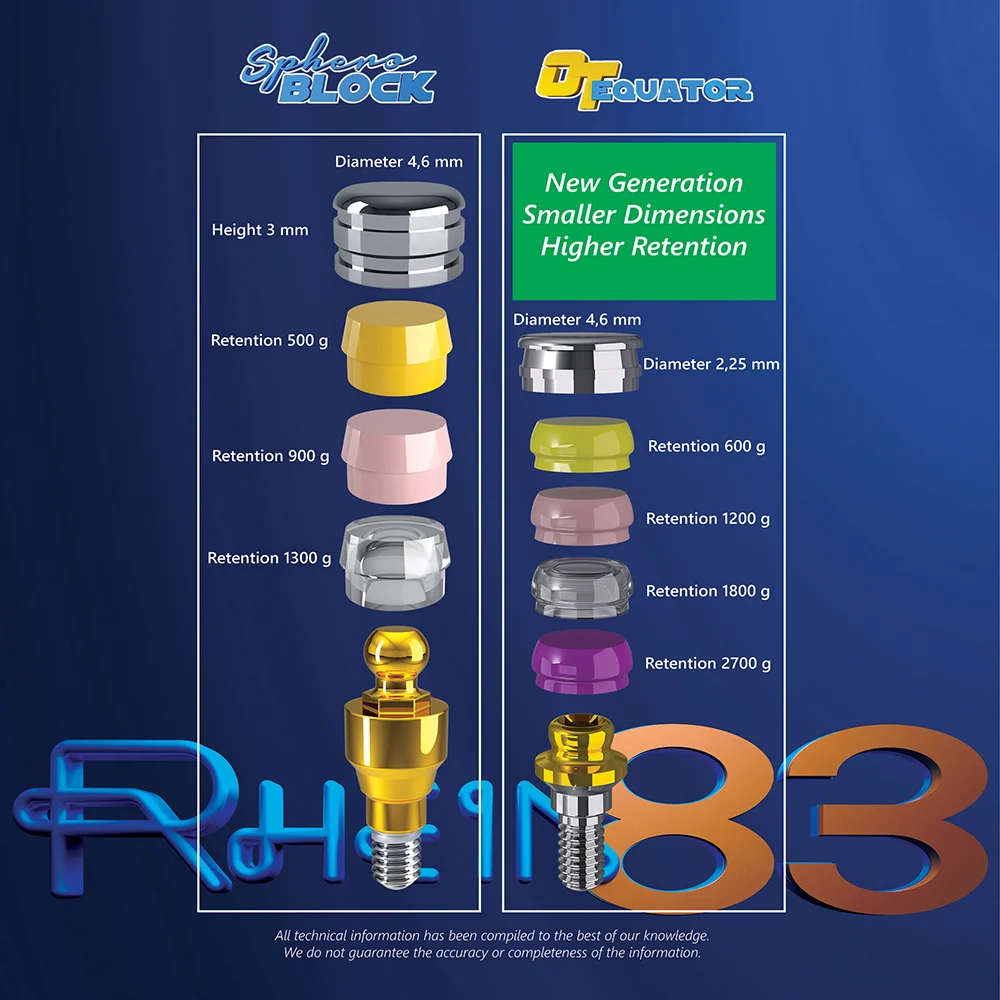
OT Equator vs Sphero Block – Understanding Retention Options for Implant Overdentures
Choosing the right attachment system is one of the most important steps in achieving a stable and long-lasting implant overdenture. Dentists and dental technicians often look for a balance between retention, size, patient comfort, and durability.
In this article, we take a closer look at two popular attachment concepts and explain how their retention options compare.
Why Retention Matters in Overdentures
Implant overdentures rely on attachment systems to keep the prosthesis securely in place while still allowing easy removal for hygiene. The correct retention level depends on several factors:
- Patient dexterity and age
- Number of implants
- Jaw anatomy
- Patient expectations for stability
- Long-term maintenance considerations
Too little retention can cause instability and discomfort. Too much retention may make the prosthesis difficult to remove and increase wear.
That is why having multiple retention options is essential.
Sphero Block – Proven Classic Attachment Concept
The Sphero Block system offers a compact attachment solution designed for reliability and simplicity.
Key technical features
- Diameter: 4.6 mm
- Height: 3 mm
- Retention inserts available in:
This range allows clinicians and technicians to select the appropriate retention level based on patient needs.
Clinical advantages
- Straightforward workflow
- Predictable retention behaviour
- Ideal for standard overdenture cases
- Easy maintenance and replacement of inserts
For many practices, this system represents a trusted baseline solution.
OT Equator – New Generation with Smaller Dimensions
Modern implant dentistry increasingly focuses on reduced vertical space requirements. The OT Equator concept was developed to address this need.
Key technical features
- Diameter: 4.6 mm
- Reduced profile diameter: 2.25 mm
- Retention inserts available in:
Why smaller dimensions matter
A lower profile attachment offers major advantages:
- More space for prosthetic design
- Ideal for cases with limited inter-arch space
- Improved patient comfort
- Increased prosthetic strength due to more acrylic thickness
The expanded retention range also allows clinicians to treat more demanding cases requiring higher stability.
Comparing Retention OT Equator vs Sphero Block
| System | Retention Range | Best Use |
|---|---|---|
| Sphero Block | 500 g – 1300 g | Standard overdenture cases |
| OT Equator | 600 g – 2700 g | Reduced space & high retention needs |
In simple terms:
- Sphero Block provides reliable standard retention.
- OT Equator provides higher retention and a lower profile for advanced cases.
Choosing the Right System for Your Case
There is no “one-size-fits-all” solution in implant prosthetics. The best attachment depends on:
- Available vertical space
- Desired retention strength
- Patient comfort and dexterity
- Long-term maintenance strategy
Many clinics keep both systems available to ensure they can select the best option for each patient.
Final Thoughts
Attachment systems continue to evolve, offering clinicians more flexibility than ever before. Whether you prefer a proven classic or a new-generation low-profile solution, understanding the retention spectrum helps you deliver predictable, comfortable overdenture outcomes.
All technical information has been compiled to the best of our knowledge. We do not guarantee the accuracy or completeness of the information.